Are Cannabis Edibles as Bad for Your Liver as Alcohol?
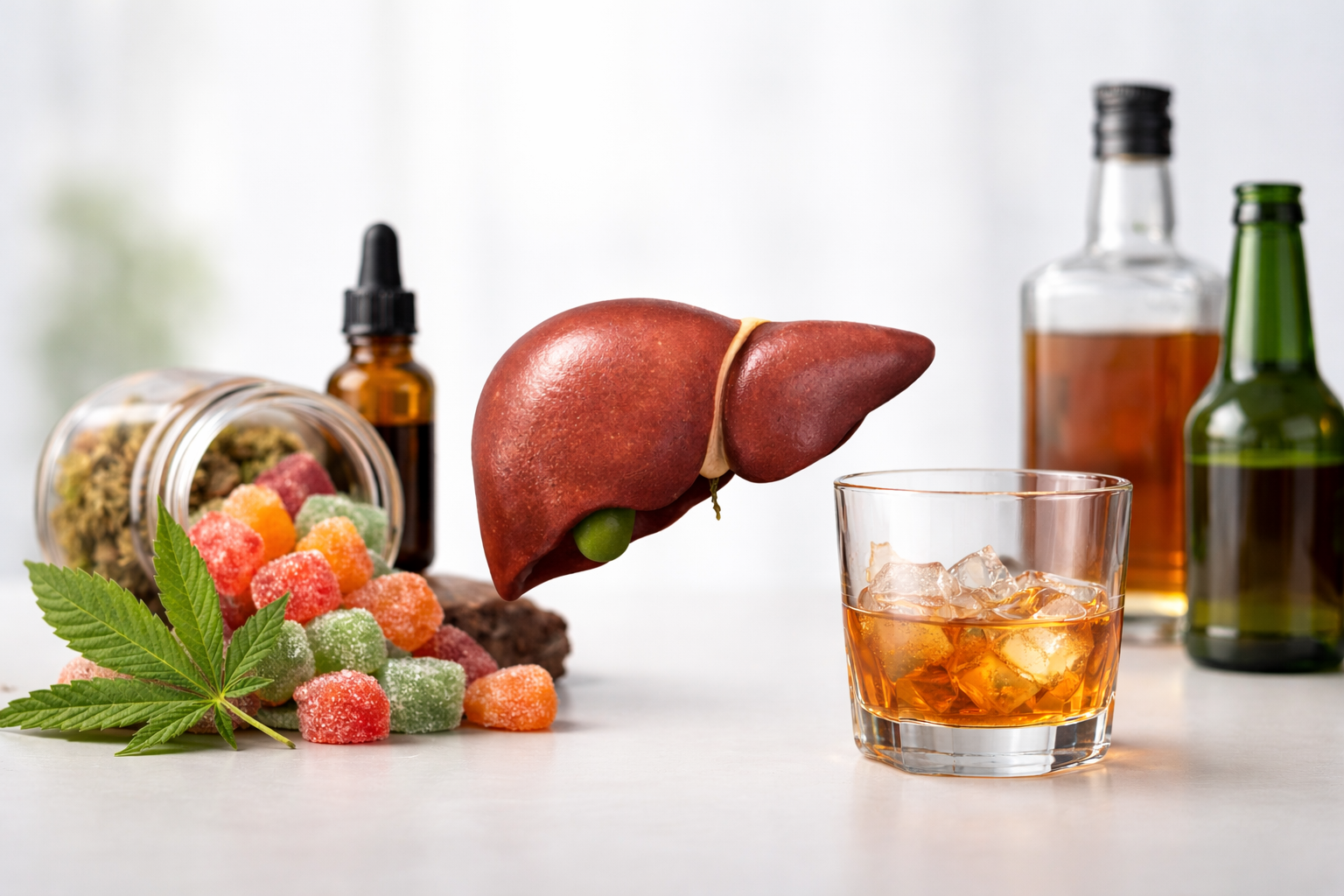
Is consuming edibles as bad for your liver as drinking alcohol? In this guide, our team will explain the liver basics, compare metabolism in the liver for alcohol vs edibles, and highlight practical steps for responsible consumption—especially for anyone with liver conditions (fatty liver, hepatitis C, chronic liver disease) or anyone taking prescription medications.
This content is provided for general educational and informational purposes only and is not medical advice. It is not intended to diagnose, treat, cure, or prevent any disease, nor should it be used as a substitute for professional medical guidance. Always seek personalized advice from a qualified clinician regarding your health decisions.
Are Weed Edibles as Bad for Your Liver as Drinking Alcohol?
If you’re wondering, “Are edibles as bad for your liver as alcohol?”, here’s the clearest way we can say it:
Alcohol has a long, well-established track record of causing liver damage and liver disease—from fatty liver disease to alcoholic hepatitis, fibrosis, and cirrhosis. (Alcohol-Related Liver Disease - Merck Manuals)
Cannabis edibles are processed through the liver, but they are not currently viewed as causing the same predictable, progressive liver-injury pathway as alcohol for most people using typical amounts.
However, there are important caveats:
High-dose CBD has been linked to liver enzyme elevations in clinical research,
Cannabinoids can interact with medications metabolized by the liver through the cytochrome P450 system. (U.S. Food and Drug Administration)
Marijuana Edibles vs Alcohol: Metabolism in the Liver
Alcohol Metabolism in the Liver
Alcohol (ethanol) is primarily broken down in the liver. A key point: your body converts ethanol into acetaldehyde, a toxic intermediate, via alcohol dehydrogenase (ADH), and then into acetate via aldehyde dehydrogenase (ALDH). That acetaldehyde step matters because it’s one reason alcohol creates a direct metabolic burden and can contribute to liver injury over time.
Alcohol-related liver disease is described as a spectrum that can include hepatic steatosis (fatty liver), alcoholic hepatitis, and cirrhosis, with features that can overlap.
Alcohol and Liver Damage: Fatty Liver Disease, Hepatitis, Fibrosis, and Cirrhosis
Fatty liver (hepatic steatosis) is an early and common consequence of excessive drinking (often reversible with abstinence)
Alcoholic hepatitis (steatohepatitis) involves inflammation and liver cell injury/necrosis
Cirrhosis is advanced disease characterized by extensive fibrosis and architectural disruption of the liver
Cannabis Edibles Metabolism in the Liver
When you eat a cannabis edible, THC is absorbed through digestion and then goes through first-pass metabolism in the liver. One of the best-known results is the conversion of THC into 11-hydroxy-THC (11-OH-THC)—a metabolite often discussed as contributing to edibles’ stronger or longer psychoactive effects for some people.
Bioavailability and Pharmacokinetics
Edibles have different pharmacokinetics than inhaled cannabis. Oral products tend to have a slower onset and longer duration than inhalation, which can lead to accidental overconsumption if someone takes more before the first dose “hits.”
Are THC Edibles “Hard on the Liver”? What We Know, What We Don’t
Here’s our honest, evidence-aligned stance:
What We Know
Your liver processes THC edibles (first-pass metabolism) and produces metabolites like 11-hydroxy-THC.
Cannabinoids are handled by enzyme systems in the liver (cytochrome P450 pathways are widely discussed in pharmacology).
What We Don’t Know (Yet)
We do not have the same level of long-term, high-confidence evidence that typical edible use produces alcohol-like progressive liver injury.
That doesn’t mean “no risk.” It means “different risk profile, with key caveats.”
Who Should Treat Edibles as a “Higher-Risk” Choice?
We’ll keep this simple. You should be especially cautious and get personalized medical advice if you have:
Liver disease, cirrhosis, hepatitis, chronic liver disease, or a history of elevated liver enzymes
Hepatitis C or other viral hepatitis history (risk management is individualized)
A complex list of medications metabolized by the liver (CYP450 interactions are a real issue)
A history of alcohol use disorder or liver injury from alcohol (your clinician will guide what’s safe)
If someone is dealing with transplant-level liver disease, any psychoactive substance (including THC edibles) should be discussed with the transplant team
Medical Cannabis Edibles in Canada and Liver Health
If liver health is a concern, medical cannabis in Canada offers a more structured option than recreational use.
Medical marijuana requires a medical document from a licensed health care professional. That document allows access through authorized medical sellers who work with Health Canada–licensed producers. This system exists to support safer dosing, clearer labeling, and better guidance—especially for people managing liver conditions or taking prescription medications.
Because the liver metabolizes THC and CBD, clinicians often recommend starting low and using predictable formats. Oils, tinctures, and sublingual tinctures allow more controlled dosing than many edibles. Products like THC gummies, CBD gummies, brownies, or cannabutter can vary widely in strength, sugar content, and additives, which increases the risk of accidental overconsumption—especially with slower oral absorption.
For people monitoring liver health, moderation matters. Medical access helps patients choose products with known cannabinoid content and avoid unnecessary strain on liver metabolism.
Is Weed Prescribed for Anxiety in Canada?
Medical Cannabis as an Alcohol-Reduction Option
Alcohol has a well-established link to liver damage, including fatty liver disease, alcoholic hepatitis, and cirrhosis. For individuals reducing or avoiding alcohol due to liver concerns, medical cannabis may be discussed.
In medical settings, patients are often guided toward:
Measured oils or tinctures
Lower-dose THC edibles
CBD-forward options when appropriate
Avoiding high-sugar or high-potency products
This is especially important for people with chronic liver disease, a history of alcoholic liver disease, hepatitis C, or those taking medications processed through liver enzyme systems (such as CYP pathways).
How to Access Medical Cannabis for the Liver in Canada?
1. Start with a Licensed Health Care Professional
In Canada, medical cannabis access typically begins with a medical document from a licensed health care professional (often your physician or a nurse practitioner). This is the authorization that supports medical marijuana use under the federal framework.
If you have liver conditions (fatty liver, hepatitis C, chronic liver disease, prior liver enzyme elevations, transplant history), you should explicitly bring that up—because it affects dosing, product format, and prescription medications risk (drug interactions).
2. Register with a Federally Licensed Medical Cannabis Seller
With the medical document, you can register with a federally licensed seller (medical channel). For example, Flodega is a licensed medical cannabis seller that provides access via Health Canada–licensed producers (i.e., regulated supply chain, consistent labeling, product details, and cannabinoid content).
Register for Medical Cannabis Edibles
3. Choose Liver-Conscious Formats (Often Non-Inhaled)
Many patients discuss non-inhaled options first. Common medical formats you can request or browse through the licensed seller:
Sublingual tinctures/oils (often discussed for predictable use)
Capsules
Edibles (e.g., Gummies, THC gummies, brownies/cannabutter-style products—watch ingredients and “extras” like sugar or additives in THC gummies)
Topicals (localized use; minimal systemic absorption in many cases)
These formats still involve the body metabolizing THC/cannabidiol (cannabinoids) and can affect bioavailability and pharmacokinetics—so “non-smoked” doesn’t mean “no considerations,” especially if you’re monitoring liver enzymes.
So… Are Edibles as Bad for Your Liver as Alcohol?
Here’s the bottom line:
Alcohol is strongly and consistently linked to liver damage pathways (fatty liver → hepatitis → fibrosis → cirrhosis) and produces toxic metabolites like acetaldehyde during liver metabolism.
Edibles are metabolized by the liver (first-pass metabolism), and THC is converted to 11-hydroxy-THC, but typical edible use is not currently framed as “alcohol-equivalent” liver harm in the medical literature.
If you’re choosing an alternative to alcohol primarily for liver reasons, edibles may be a lower liver-disease risk choice than heavy drinking.
FAQ: Cannabis Edibles, Alcohol, and Liver Health
-
No. Alcohol has a well-established pathway that causes liver damage over time. Cannabis edibles are processed by the liver but are not currently associated with the same predictable progression of fatty liver, hepatitis, fibrosis, and cirrhosis in typical use.
-
Edibles avoid inhalation and lung exposure, but they still rely on liver metabolism. For liver health, safety depends more on dose, frequency, product consistency, and medical supervision than on whether cannabis is smoked or eaten.
-
People with chronic liver disease, hepatitis C, prior liver injury, elevated liver enzymes, or those taking medications metabolized by the liver should use extra caution and seek personalized medical guidance before using edibles.
-
Yes. Medical cannabis in Canada provides structured access, clearer labeling, and more predictable dosing. This can be especially important for people managing liver conditions or monitoring liver enzymes over time.
-
For many people, yes. Alcohol is consistently linked to liver disease, while edibles are not currently shown to cause similar progressive liver injury. However, moderation and appropriate dosing remain important, especially for those with existing liver conditions.
-
Yes. Anyone with liver disease, abnormal liver tests, or complex medication use should consult a qualified health care professional before using cannabis edibles to ensure safe dosing and avoid potential drug interactions.