Is Hemp Oil the Same as CBD Oil? | Hemp Seed Oil vs Cannabis CBD Oil
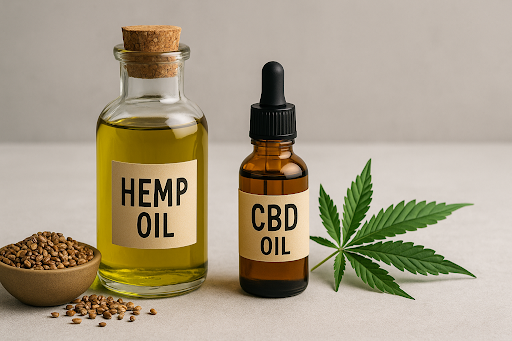
Have you ever wondered whether hemp oil, hemp seed oil, and CBD oils are all the same thing? Retailers, wellness brands, and online marketplaces often blur the lines—sometimes by accident, sometimes not. In this guide, we’ll break down what’s what, where medical cannabis CBD oil fits in, and how to avoid misleading products while staying in the legal lane.
Disclaimer: We’re not a clinic, and the following content is provided for informational purposes only. We strongly encourage Canadians to follow the regulated pathway if they’re seeking medical cannabis CBD oil, rather than relying on vague hemp products or unverified claims.
Are Hemp Oil and CBD Oil the Same Thing?
No, hemp oil is not the same as CBD oil. They come from different parts of the cannabis plant, contain different compounds, and are regulated differently—especially in Canada.
If you’re looking at cannabis or CBD oil for medical purposes in Canada, you need a medical document from an authorized healthcare professional, and then you register with a licensed medical cannabis seller. Those sellers, in turn, source products from Health Canada–licensed producers, with standardized labels and batch testing.
Hemp Oil vs CBD Oil: What Is the Difference?
In short:
Hemp seed oil = nutritious plant oil with almost no cannabinoids.
CBD oil = cannabinoid-focused product with measurable CBD, regulated in Canada as cannabis, not as a simple cooking or skincare oil.
What Is Hemp Oil?
When people talk about “hemp oil”, they’re usually talking about hemp seed oil:
It’s made by cold pressing the seeds of industrial hemp plants.
It’s naturally rich in omega-3 and omega-6 fatty acids, vitamin E, and other nutrients.
It contains negligible CBD and no meaningful THC, so it doesn’t cause a “high” and isn’t used as a cannabinoid product.
You’ll see it in food products, skincare, and cosmetics.
Phrases like “hemp extract” or “full-spectrum hemp” may suggest cannabinoids and terpenes—but unless the label clearly lists how many milligrams of CBD are in the bottle and shows proper lab testing, you should treat it as a general hemp product, not reliable CBD oil.
What Is CBD Oil?
“CBD oil” means an oil that actually contains CBD (cannabidiol) extracted from the flowers and other above-ground parts of the hemp or cannabis plant. It’s usually mixed into a carrier oil (like MCT oil or hemp seed oil) and sold as:
Full-spectrum CBD oil – CBD plus other cannabinoids and terpenes, with trace THC within legal limits.
Broad-spectrum CBD oil – similar, but typically with THC removed.
CBD isolate oil – highly refined, with CBD only.
What Hemp Oil and CBD Oil Are Actually Good For
Hemp Seed Oil: Food, Skin, and Everyday Wellness
Hemp seed oil is best thought of as a nutritious plant oil and cosmetic ingredient—great in the kitchen and on the skin, but not a substitute for CBD oil if you’re specifically looking for cannabinoids.
Nutrition & cooking
Used in salad dressings, smoothies, and cold dishes.
Naturally rich in omega-3 and omega-6 fatty acids, vitamin E, and other plant compounds that support a balanced diet.
Because it has almost no CBD and no meaningful THC, it won’t get you high and isn’t used as a cannabinoid supplement.
Skin and hair care
A common ingredient in moisturizers, serums, lip balms, and body oils.
Often chosen for dry or sensitive skin routines because of its fatty acid profile and lightweight texture.
Non-wellness uses
Hemp from the same plant family shows up in:
Textiles
Paper
Building materials
Wood finishing products
CBD Oil: For People Exploring Symptom Relief
Cannabis CBD oil is made by extracting cannabidiol and related plant compounds from the flowers and other aerial parts of the cannabis or hemp plant, then blending them into a carrier oil like MCT oil or hemp seed oil.
Depending on the formulation, people use CBD oil when they’re exploring support for:
Certain seizure disorders (in tightly controlled, prescription-only contexts)
Specific sleep problems
Some forms of anxiety or stress
Pain-related issues, such as chronic pain or muscle spasticity linked to conditions like multiple sclerosis
However, these are clinical, supervised contexts. If someone in Canada wants to use CBD oil specifically for medical reasons, the appropriate path is:
Talk to a healthcare professional,
Obtain a medical document if CBD or medical cannabis is appropriate, and
Access products through a licensed medical cannabis seller that sources from Health Canada–licensed producers.
How to Read Labels When Purchasing Hemp Seed Oil or CBD Oil
If the Label Says “Hemp Seed Oil” or Just “Hemp Oil”
It is likely:
derived from industrial hemp seeds
rich in essential fatty acids, vitamin E, omega-3, omega-6, and omega-9 fatty acids
potentially supportive for skin barrier and skincare products
may act as a nutritional powerhouse
anti-inflammatory benefits are often discussed
If the Label Says “CBD Oil” or “Cannabidiol Oil”
Look for:
exact CBD mg/ml
whether it’s full-spectrum, broad-spectrum, or CBD isolate
a scannable or linked certificate of analysis
clear mention of origin (e.g., industrial hemp, cannabis plant),
production under a regulated system (in Canada: Health Canada oversight).
If all of that’s missing, it’s marketing, not assurance.
Hemp Seed Oil and Cannabis CBD Oil: A Side-by-Side Comparison
| Hemp Oil (Hemp Seed Oil) | CBD Oil (Cannabis CBD Oil) | |
|---|---|---|
| Where it comes from | From cold-pressed hemp seeds. | From the flowers and other aerial parts of the cannabis/hemp plant. |
| Main stuff inside | Mostly healthy fats (omega-3, omega-6, linoleic acid, linolenic acid) and antioxidants. Almost no CBD and no meaningful delta-9 Tetrahydrocannabinol. | Contains CBD and other phytocannabinoids. May include tiny amounts of delta-9 tetrahydrocannabinol (within legal limits). |
| What it’s used for | Food and skincare: salad dressings, smoothies, topical treatments, lotions, hemp oil capsules. | People explore it for symptom relief related to pain, sleep disorders, stress, or certain seizures (always in supervised, medical contexts). |
| How it acts in the body | Nourishes skin and body with fats and bioactive phytochemicals; does not really act on the endocannabinoid system. | CBD interacts with the endocannabinoid system and cannabinoid receptors, plus other pathways like serotonin receptors. |
| Will it get you high? | No. It doesn’t have enough cannabinoids or THC to cause intoxication. | Proper CBD oils are non-intoxicating, but they are still treated as cannabis products in Canada. |
| Regulation & checks (Canada) | Treated like a food or cosmetic oil, not as cannabis. | Regulated as cannabis, with expected laboratory testing and quality controls through licensed producers and sellers. |
Where Does Medical Marijuana CBD Oil Fit In?
If someone in Canada wants to use CBD products for medical reasons (for example, complex pain, seizure disorders, or autoimmune conditions), it has to happen through the medical cannabis system, not the supplement aisle.
The usual steps are:
Start with a healthcare professional – talk to a doctor or nurse practitioner about your symptoms and current medications.
Get a medical document – if medical cannabis is appropriate, the clinician issues a formal medical document (this functions like a prescription, but under cannabis rules).
Register with a licensed seller – you choose a Health Canada–licensed medical cannabis seller and complete their registration process.
Access products from licensed producers – your medical CBD oil and other cannabis products come from licensed producers operating under the Cannabis Act.
Medical cannabis products in this channel are:
Standardized and clearly labeled (CBD and THC content, dosage info),
Lab-tested, with batch-specific certificates of analysis (COAs),
Sold under Health Canada oversight, separate from wellness hemp oils or unregulated CBD products.
Choosing this regulated medical cannabis pathway has clear benefits: you get consistent products, clear CBD and THC information, and independent laboratory testing. The medical system provides quality control, legal protection, and better-informed decisions about how CBD fits into your overall care.