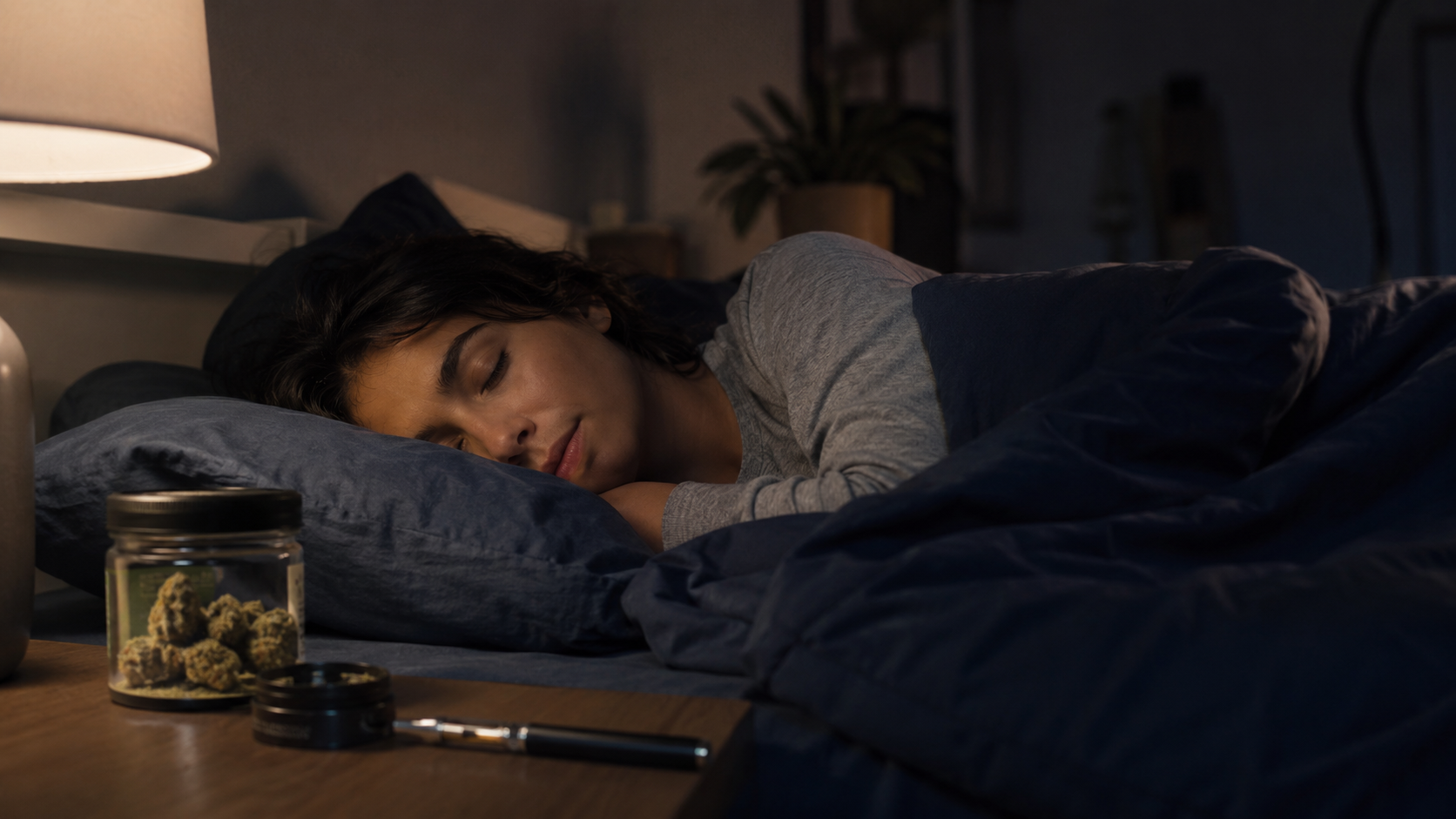
Plenty of Canadians use cannabis before bed as part of their nighttime routine, whether they're dealing with chronic pain, racing thoughts, or just want to wind down properly after a long day. But what does sleeping while high actually do to your brain? And is sleep while high genuinely different from normal sleep?
We've been in the cannabis industry for over two decades. The relationship between weed and sleep is one of the most common topics we hear about, and for good reason. Here's what we know, what the research says, and what you should think about before making weed your nightly ritual.
How Does THC Make You Sleepy?
Most people know that cannabis can make you drowsy, but fewer know why. The sedative effect of THC is a real neurochemical process, and understanding it helps you use cannabis smarter.
THC, Adenosine, and Your Brain's Off Switch
When you consume cannabis, THC travels through your bloodstream and binds to CB1 receptors throughout your brain and central nervous system. This is part of your endocannabinoid system, which plays a major role in regulating sleep, mood, appetite, and memory. When THC activates these receptors, it triggers a two-part effect that makes sleep feel closer:
It increases adenosine levels in the brain
It suppresses the brain's arousal system
Adenosine builds up naturally the longer you're awake, and the more it accumulates, the sleepier you feel. THC accelerates that process. It also amplifies GABA, a neurotransmitter that slows brain activity and promotes calm, while dopamine contributes to the relaxed feeling that makes drifting off easier.
The result is a calming effect that reduces sleep latency, especially for people who struggle to quiet a busy mind.
THC Dose for Sleep
Low to moderate THC tends to be sedative. Higher doses can tip into anxiety territory, which is the opposite of what you want before bed. Over time, regular use can also affect your circadian rhythm, shifting how your body's internal clock helps regulate sleep onset and the transition into non-REM sleep.
What CBD Does Differently (And Why It Matters for Sleep)
CBD doesn't produce a high but contributes to the sleep picture differently. At lower doses, cannabidiol can promote alertness, which is why plenty of people use it during the day. At higher doses, it leans toward relaxation and can improve total sleep time by easing anxiety and physical tension.
The most effective approach for sleep, according to consumer reports, is combining THC and CBD together. THC handles the sedative onset while CBD-rich strains or products soften the edges, quieting hyperarousal and reducing the likelihood of THC-induced anxiety. This extends the overall relaxation effect and helps more people stay asleep through the night.
For a deeper look at how these two cannabinoids compare for winding down, check out our breakdown of THC vs CBD for relaxation.
What Happens to Your Sleep Stages When You're High
Cannabis doesn't just knock you out. It actively reshapes your sleep architecture, changing how much time you spend in each sleep stage throughout the night. Understanding this is the key to using cannabis for sleep in a way that actually serves you.
1. REM Sleep Takes a Hit: What That Means for Dreams and Memory
One of the most consistent findings in cannabis and sleep research is that THC reduces REM sleep. REM (rapid eye movement) sleep is the stage most associated with dreaming, and it's critical for memory consolidation and emotional processing. When you go to sleep high, especially with a THC-heavy product, you'll likely spend less time in REM and more time in the deeper stages.
The practical result: fewer dreams, or none you can remember. For most people, this isn't a problem, but consistent REM reduction may have cumulative effects on memory consolidation, learning, and mood regulation over time.
People with PTSD or trauma-related nightmares and night terrors have reported that sleeping high produces reduced nightmares, precisely because THC suppresses the dream phase. For that population, REM reduction is actually the point.
When you eventually stop using cannabis regularly, expect a rebound REM effect: intense, vivid dreams after quitting as your brain catches up on the REM sleep it's been missing.
2. Deep Sleep Gets a Boost: The Restorative Side of Sleeping High
While REM takes a hit, slow-wave sleep (also called deep sleep or SWS) tends to increase when you're high. This is the most physically restorative stage of the sleep cycle.
This phase is where your body focuses on:
muscle repair
immune function
hormone regulation
and cellular recovery
This is why people report sleeping hard after consuming cannabis: they're genuinely getting more deep sleep and deeper sleep overall.
For people dealing with chronic pain, inflammation, or physical recovery, that increase in slow-wave sleep is one of the more compelling arguments for nighttime cannabis use. The tradeoff is that this deeper, heavier sleep comes at the cost of the lighter, dream-rich REM cycles your brain also needs.
The Morning After: Does Waking Up Still High Actually Happen?
Yes, it can. The weed before bed effects don't always end when you wake up. Whether you're still high in the morning depends on:
how much you consumed
when you consumed it
the format
Edibles in particular have a longer duration curve than smoked or vaped flower, so a large edible taken right before bed can still be active when your alarm goes off. Even after a full eight hours, the altered sleep architecture can leave you less refreshed than expected. This tends to be worse with higher doses and more frequent use.
Is Sleeping High Bad for You? Short-Term vs. Long-Term
Using marijuana before bed or going to bed high is not a simple good-or-bad situation. Whether weed works as a sleep aid, and whether marijuana for insomnia is actually a smart approach, depends heavily on how often and how much you're consuming.
Occasional and chronic use produce genuinely different outcomes, and collapsing them together is where many oversimplified takes go wrong.
Occasional Use vs. Nightly Use: A Real Difference
Occasional Weed Use and Sleep
For occasional users, the picture is mostly positive. Nighttime cannabis use in moderation tends to help you fall asleep faster, with a noticeably faster sleep onset compared to lying awake with a spinning mind. Spending more time in restorative deep sleep, anxiety relief, and pain relief are all legitimate short-term benefits.
For someone dealing with a rough week, a flare-up, or acute insomnia, cannabis can be an effective natural sleep aid without the dependency profile of prescription sleep medications.
Regular Weed Use and Sleep
The shift happens with regular use. Sleeping high every night produces a different set of outcomes than occasional use. When cannabis becomes a nightly ritual, a few things start to change:
Tolerance builds. Your body needs more THC to achieve the same sedative effect, which means doses creep up over time.
Sleep architecture stays altered. Consistent REM suppression over weeks and months has cumulative effects on memory, mood, and emotional processing.
Natural sleep mechanisms weaken. Over time, your brain's own ability to initiate sleep without THC can diminish, which sets the stage for dependency.
This doesn't mean nightly use is automatically a problem for everyone, but going in with eyes open about these dynamics matters.
Tolerance, Dependence, and Rebound Insomnia: What Chronic Use Does
With chronic use, the risks become more concrete. Tolerance develops relatively quickly, often within a few weeks of nightly cannabis use. What started as half a gram of flower at bedtime gradually needs to be more to work the same way.
The long-term effects of chronic use are real. Dependence is a genuine outcome for some people: not in the intense physiological sense of harder substances, but in a functional sense where sleep without cannabis feels genuinely difficult.
Nightly use risks include:
rebound insomnia when stopping
disrupted sleep patterns
heightened anxiety from consistently poor REM.
A gradual tolerance break is smarter than stopping cold, giving your sleep-wake cycle time to recalibrate. The vivid dreams that accompany rebound REM are intense but temporary. Most people's sleep normalizes within two weeks of stopping.
If you want to take a break and reduce withdrawal discomfort, tapering down gradually is a smarter approach than stopping cold.
Choosing the Right Cannabis for Sleep: Strain, Format, and Timing
Indica, Sativa, or Hybrid: Which Helps You Sleep?
Indica Strains for Sleep
The short answer is indica, with caveats. Indica strains are known for their body-heavy, sedating effects, making them the go-to for nighttime use. THC-rich strains with indica genetics tend to have terpene profiles that enhance the calming, relaxing experience.
High-THC strains are effective for sleep onset but can cause next-day grogginess at large doses, so Health Canada's start-low guidance applies.
Sativa Strains for Sleep
Sativa strains are generally the wrong call for bedtime. They tend to promote alertness, cerebral stimulation, and an energized headspace, which is useful during the day but counterproductive when you're trying to drift off.
For a full breakdown of what sativa actually does to your body and mind, see our guide on the effects of sativa strains. And if you want to know which cannabis works well when you need to stay sharp and focused, our piece on cannabis strains for daytime focus is worth a read.
Hybrid Strains for Sleep
Hybrids sit in the middle. An indica-dominant hybrid can be a good option if you find pure indicas a bit too heavy, or if you want a more balanced effect that eases anxiety without fully sedating you.
Terpenes That Actually Matter for Sleep (Myrcene, Linalool, and More)
Terpenes are arguably as important as THC percentage when it comes to how a strain affects your sleep. Terpenes are the aromatic compounds in cannabis that shape the character of the high and modulate how cannabinoids interact with your body.
Two stand out for sleep:
Myrcene is the most common terpene in cannabis and is strongly associated with sedation, muscle relaxation, and a heavy body effect. High-myrcene strains are reliably the best performers for nighttime use.
Linalool, a terpene also found in lavender, has well-documented calming and anxiolytic properties. It's especially useful for people whose sleep problems are rooted in anxiety rather than pain.
This is one area where craft cannabis genuinely outperforms mass-market options. Lot420's select-batch approach produces flower with terpene profiles between 2% and 5%, significantly higher than most commercial products.
How Much, How Soon Before Bed, and What Format Works Best
Timing and format affect how cannabis hits during sleep more than most people realize. Here's a practical breakdown:
Smoked or vaped flower: Fastest onset (5-15 minutes), shorter duration (2-3 hours). Best for falling asleep quickly. Consume 30-45 minutes before bed.
Tinctures: Mid-range onset (15-45 minutes), moderate duration. Good for a smoother, more controlled experience.
Edibles: Slowest onset (30 minutes to 2 hours), longest duration (4-8 hours). Best for people who wake in the night and struggle to get back to sleep, but easy to overdo. See our article on weed gummies for anxiety for more.
A moderate dose of THC is more reliably sedative than a high one, which can increase anxiety and disrupt sleep. For sensitive users, low-THC strains or microdosing reduce the time to fall asleep without heavy psychoactive effects or next-day grogginess. A consistent nighttime routine around a particular format, dose, and strain tends to outperform ad hoc use.
The Bottom Line: Should You Use Weed to Help You Sleep?
If you're dealing with insomnia, chronic pain, anxiety, depression-related sleeplessness, or stress that won't quit, marijuana and sleep have a real relationship worth understanding.
Does weed help you sleep? For many people, yes.
Is marijuana good for sleep long-term? That's more nuanced.
Cannabis sleep aid strategies genuinely work for many people, and weed as a sleep aid is a reasonable choice, but the conditions matter. Cannabis reduces sleep latency, increases restorative deep sleep, and, for many people, produces better sleep quality than the alternatives.
The quality of what you're consuming also matters more than people give it credit for. Well-grown craft flower with a known terpene profile delivers a more predictable and repeatable experience than whatever's cheapest on the shelf.
For people dealing with pain that's keeping them awake, see our guide to the best cannabis strains for chronic pain. And if anxiety is the main driver of your sleep issues, our piece on the best weed strains for anxiety goes deeper on that specific use case.